A BriefJourney Through The History of Immersive Art
Exploring the historical roots and evolution of immersive art. From its early influences to the beginning of the use of technology that define it today
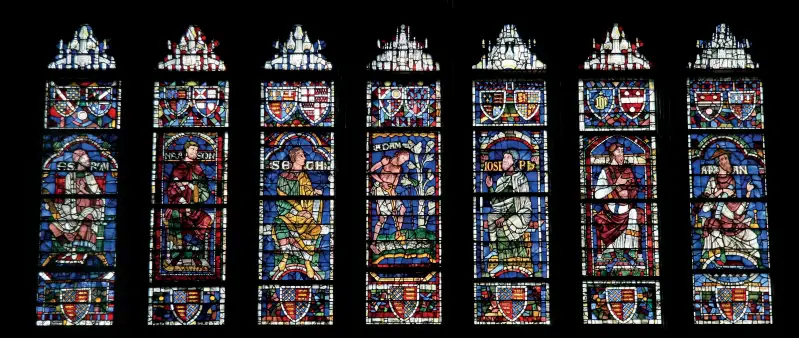
The immersive experience has been around for centuries. Medieval pilgrimages stressed the importance of involving all the senses when encountering the iconography of the saints. The architectural and material aspects of sacred locations, such as Canterbury Cathedral, included altars, screens, glass, paintings, relics, and shrines designed to give experiences that stimulated their audience‘s use of all of their senses. (images: inside Canterbury Cathedral)

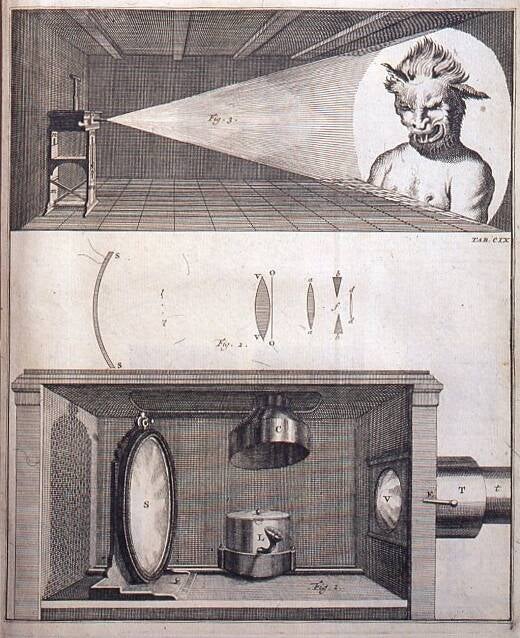
Shadow shows are likely to have a long history and there are examples of polished bronze mirrors being used to cast images as long ago as the 5th century CE in China and Japan.
Christiaan Huygens, the magic lantern (1659)
The magic lantern was the earliest form of projector technology using lenses, and was first conceptualised by Dutch scientist Christiaan Huygens. Early models were used by showmen across Europe for phantasmagoria performances, alongside sound effects, suggestive lighting and allegedly, punch spiked with hallucinogens.
Robert Barker, the panorama (1793)
Among the popular entertainments of the Regency era, the panorama was created by Robert Barker. Barker’s innovation was a technology of his own creation, allowing visitors to inhabit an immersive 360-degree painting, arranged so that an observer would see a seamless view of a city.

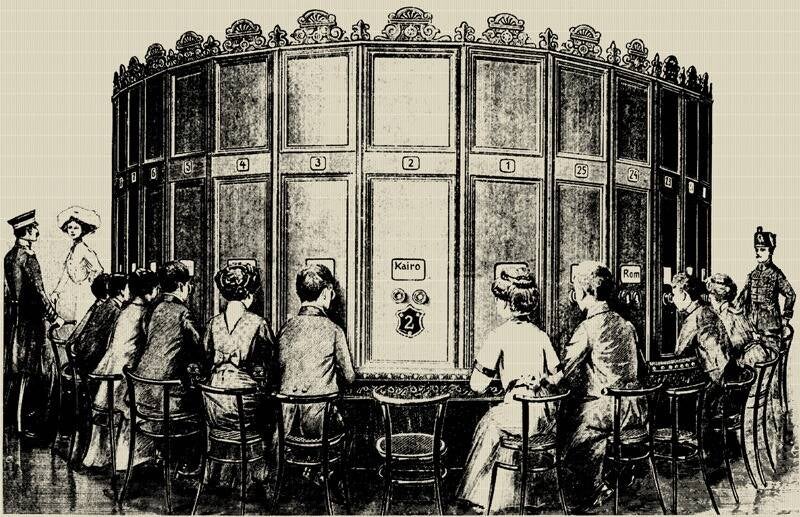
August Fuhrmann, the Kaiserpanorama (1895)
As panorama technologies advanced, their design became more sophisticated. The Kaiserpanorama was a large circular box with 25 peepholes for viewing the rotating stereoscopic glass slides.
By the mid-20th century, the relationship between artist and the viewer was experiencing much change. Through movements like Dada, Fluxus and performance art, the observer was an increasingly integral part of the artwork, provoking sensory responses in the viewer.
Gustav Metzger, Liquid Crystal Environment (1965)
Gustav Metzger collaborated with scientist Arnold Feinstein to develop displays of liquid crystals placed under glass slides that changed colour as they were heated and cooled. This was was projected onto screens in the exhibition space.


1975, in a cavern of a desolated quarry in Provence, France, La Cathédrale D’Images (The Cathedral of Images) was one of the forerunners of the immersive exhibition concept as it exists in contemporary times. Established by French photographer and filmmaker Albert Plécy, it is used as gallery space where visitors can actively explore an immersive experience. it has an active programme of exhibitions.
Create Your Own Website With Webador